
For the costume of the businessman character, we chose to dress our actor in a stereotypical representation of business dress. This encompassed a smart suit, black leather shoes, watch and briefcase. The black suit is a very typical costume linked to the businessman archetype; the smart appearance represents the power and authority that some businessmen have over society whilst also showing the professional nature of their every day life. The wearing of a suit also commands respect, as well as showing respect for others. Black suits are worn by almost every businessman in the industry and so men suits become almost faceless, they loose their individuality due to the stereotype that the suit carries; therefore the character in the music video is dressed in a costume that is meant to show a cold exterior.
_01.jpg) |
| Sam Spade in The Maltese Falcon |
 |
| Goodfellas, showing similar costume to the businessman character in our music video |


These are the shoes worn by our businessman character. Black leather completes the smart and professional appearance of the character; the colour black is also an important theme so we made sure that the shoes were black to continue the idea of power and formality. The shoes and the suit show the wealth of the character, suits and these types of shoes are expensive and so wearing them exhibits the possible wealth of the individual, further reinforcing this characters status amongst society. These shoes also blend into the surroundings of the corporate world, giving the character a sense of anonymity to carry out corrupt actions.

The protester is also shown carrying/displaying a sign. This is a common sight when it comes to protests, demonstrations and strikes and so we thought it would be reasonable to continue this generic convention. This sign reads 'We're In Trouble' which is part of the name of track that we have chosen, but also works effectively as a message about society and the 1%. The sign immediately identifies the character to the audience as they associate the sign with protesting, thus the character is partially established through this prop.

When choosing the costume for the businessman character, myself and the other member of the group purposely chose a red tie. Red is the colour of fire and blood, so it symbolises power, danger, strength and determination, and in particular darker red is associated with vigour, rage, anger, leadership, malice and wrath. These characteristics work towards creating a powerful and intimidating image for the audience, with the red tie reinforcing that the businessman possesses strength and wrath over society. The red tie also contrasted well against the black and white tones of the suit, making the character stand out with a memorable appearance. The red tie and black suit combination could can also be seen in the film 'Hitman', with the plot being about an efficient and ruthless hitman (unsurprisingly). This intertextual reference highlights once again the danger and power that the character of the businessman exerts.
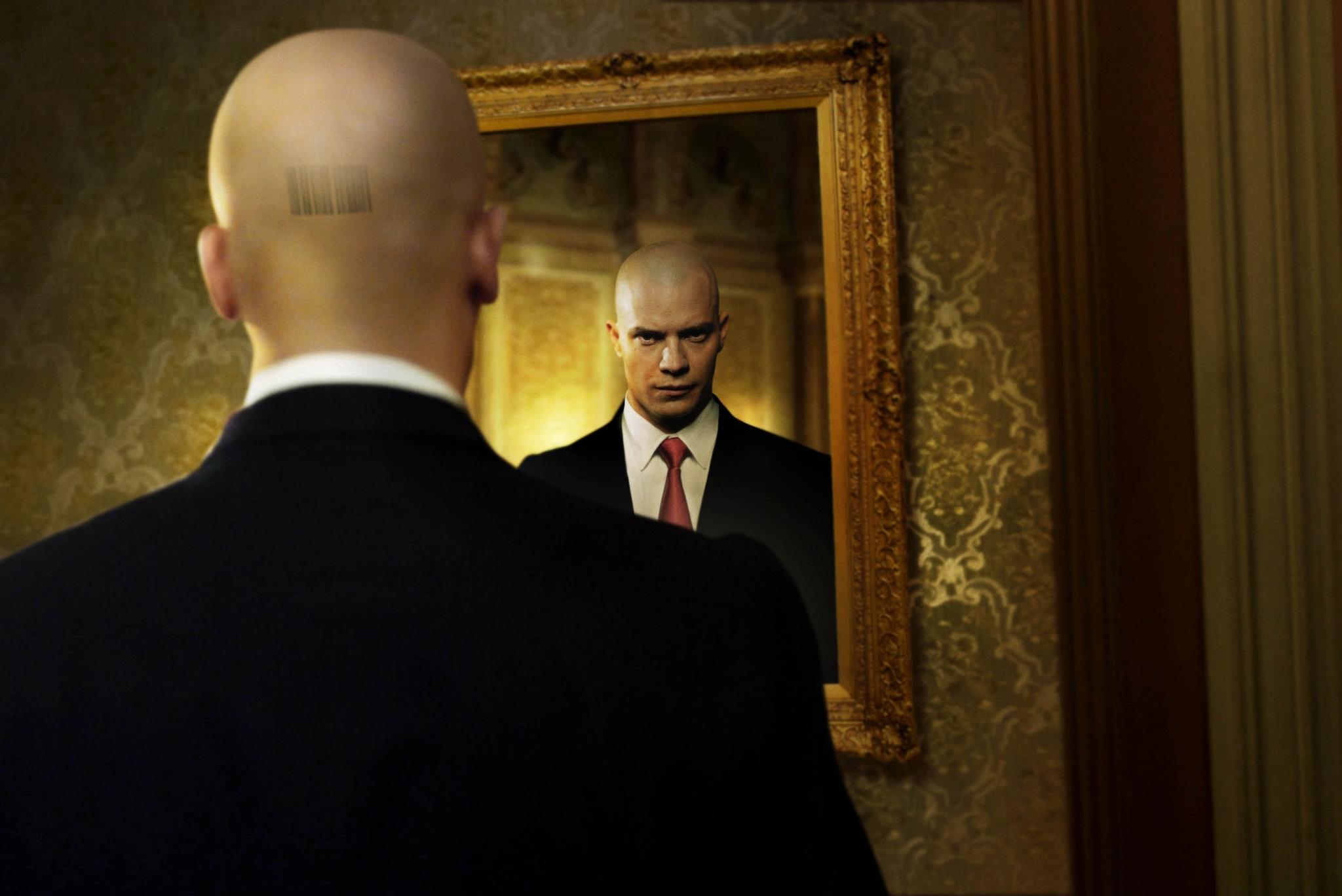 |
| 'Hitman' seen wearing the black suit and red tie |

The businessman is also shown to be carrying a newspaper, revealed to be The Daily Mail, which is very fitting for his character. The Daily Mail has a heavily conservative following and so it was an appropriate choice for the character that we were trying to create. It also shows that the businessman likes to be up to date with the news and other important information such as the stock exchange.

The businessman character is also sometimes seen carrying a briefcase, this prop is used to add to the 'corporate' image by giving the impression that the briefcase contains important work documents. However, the briefcase acts as an enigma as the audience never gets to see what's inside, creating an air of mystery about the character and his briefcase. This is a possible intertextual reference to 'Pulp Fiction' as the briefcase in the film is opened, but never shown to the camera, leaving the audience guessing as to what is so valuable inside the case. It has been discussed that the gold glow coming from the case could be Marcellus Wallace's soul that was sold to the devil, but these are simply speculations. Briefcases are also used in films to carry valuables like money, drugs or weapons, so there is no telling what may be inside our characters case. The briefcase is whatever the audience wants it to be.
 |
| The briefcase in 'Pulp Fiction' being opened and showing a gold light on Vincent Vega's face |

The costume for the protester character is very different from the businessman; we aimed to make it obvious that the protester isn't as wealthy as the businessman and thus cannot afford to spend the same amount of money on clothes. Baring this in mind, we chose for the character to wear a plain white t-shirt with no branding, showing the low cost, and a pair of old jeans with holes in which display the fact that the protester has had these jeans for a long time, not having the money to invest in a new pair (or perhaps not wanting to play part in consumerism). To contrast the smart black leather shoes of the businessman, the protester is seen wearing a pair of old trainers that are much more practical, evidencing the need for substance rather than style. The aim of this costume is to connote to the audience that the protester simply doesn't have the same amount of money to invest in expensive clothes, but more importantly, does not possess the same amount of commanding power in society. This is done by making the character seem quite normal, fitting in with the rest of the 99% who will be wearing similar clothing. This costume doesn't carry the same status as the suit and this is where the binary opposition lies.


At one point, the businessman character checks his watch. We chose to use a smart watch as an additional reminder that the character is wealthy and powerful, he is able to spend his money on smart material possessions simply because he can. The protester on the other hand doesn't even have a watch, showing again the difference between the two characters. The watch could be symbolising the hectic and busy lifestyle that the businessman character has in the corporate world, this gives the character an air of punctuality and precision because he has to be organised. Watches have become reasonably iconic in film, featuring in films such as 'Pulp Fiction', 'Drive' and "2001: A Space Odyssey".

I like your uploaded images from your shoot and from research they add interest to your post whilst also indicating aspects of your shoot.
ReplyDeleteDo be careful about generalising, for example I've noticed that politicians of the Cameron persuasion seem to wear grey suits - this is in clips on the news from the House of Commons. But you say you were talking about archetypes,
Overall strongly researched and evaluated.